
Texas Resident Lookup Records
Texas has no single public index for every fact about one person. Choose a source by the known detail: a parcel number, case number, or event year and county. Compare names, dates, places, and roles across records. State portals often route searches to county custodians, whose online coverage varies.
| Record | What It Confirms | Where to Search | Access |
|---|---|---|---|
| Appraisal roll | Owner, parcel, situs and tax-mailing address | County appraisal district | Public owner/address database; occupants are not listed |
| Voter registration | Voter’s own status, county and precinct | VoteTexas lookup | Individual lookup; full lists follow Chapter 18 rules |
| Court index or file | Parties, case type, dates, filings and orders | re:SearchTX and local clerks | Integration, sealing and copy access vary |
| Vital index | Event date, county and listed names | DSHS indexes | Index access differs from a certificate |
| Business or license record | Filed business role or credential status | SOS and licensing boards | Public business or professional fields vary |
With only a name, add a county, age range, former address, or family link. Check dates and roles before treating records as a match. A property roll names an owner, not all occupants; a license profile may use a business address; voter tools do not list households.
Check a Texas Voter Record
VoteTexas offers a voter an individual status check by VUID, the driver’s-license number supplied at registration, or first and last name. Name searches can return multiple people. The tool is for confirming one voter’s status and election logistics, not for browsing households or a ZIP.
A full voter file is a separate request under Election Code §18.008. The Secretary of State’s request form asks for contact details, list scope, format, certification, signature, and payment; a list arrives as zipped fixed-width text. Under §18.066, using voter data to advertise or promote products or services is a Class A misdemeanor. List membership does not prove a home or household.
Potential fields include name, residence or mailing address, county, precinct, VUID, registration date, status, districts, and election participation. It records which elections a voter took part in, never ballot choices. County and effective dates add context, not proof of a current residence.
Search Texas Court Names
re:SearchTX requires an eFileTexas sign-in or registration. Dashboard/Search offers Cases, Filings, Text in Documents, or Hearings; enter a keyword, then filter by county/court, party or case descriptor, filing type, and date. Case and Filing Details open available records. Searches can be saved or exported. Coverage varies by county integration and access rules; criminal cases are generally outside this public layer.
TAMES appellate search is separate. Its form searches court, full or partial case number, civil/criminal type, filing dates, style, attorney/bar number, trial case number, originating court, county, or trial court. It refreshes nightly and holds no trial-court files. Texas cases may be in municipal, justice, county, district, appellate, or federal courts, so start with the right clerk. For a local gap, check the clerk terminal or call about copies; federal files use PACER, and old county books may need TSLAC or library microfilm. Court requests follow Rule 12 or common-law channels, not an automatic PIA request.
Search and sample docket fields may include:
| Search or docket field | What to enter or compare |
|---|---|
| Search mode / keyword | Cases, Filings, Text, or Hearings; enter a name or term. |
| Filters | County/court, party or case descriptor, record type, and date. |
| Party or style | Names and roles as filed; spelling may be shortened. |
| Number and case type | Trial/appellate ID and civil, family, probate, or other category. |
| Court and county | Originating court, county, and appeals court, if any. |
| Filing / hearing dates | Chronology; a hearing date is not a decision. |
| Attorney / bar number | Counsel name or bar-number search. |
| Disposition / documents | Order or judgment if shown; files may be public, sealed, restricted, or paid. |
Test a name and its variants in the official re:SearchTX portal. The image shows the account and search entry point, not a person’s result.
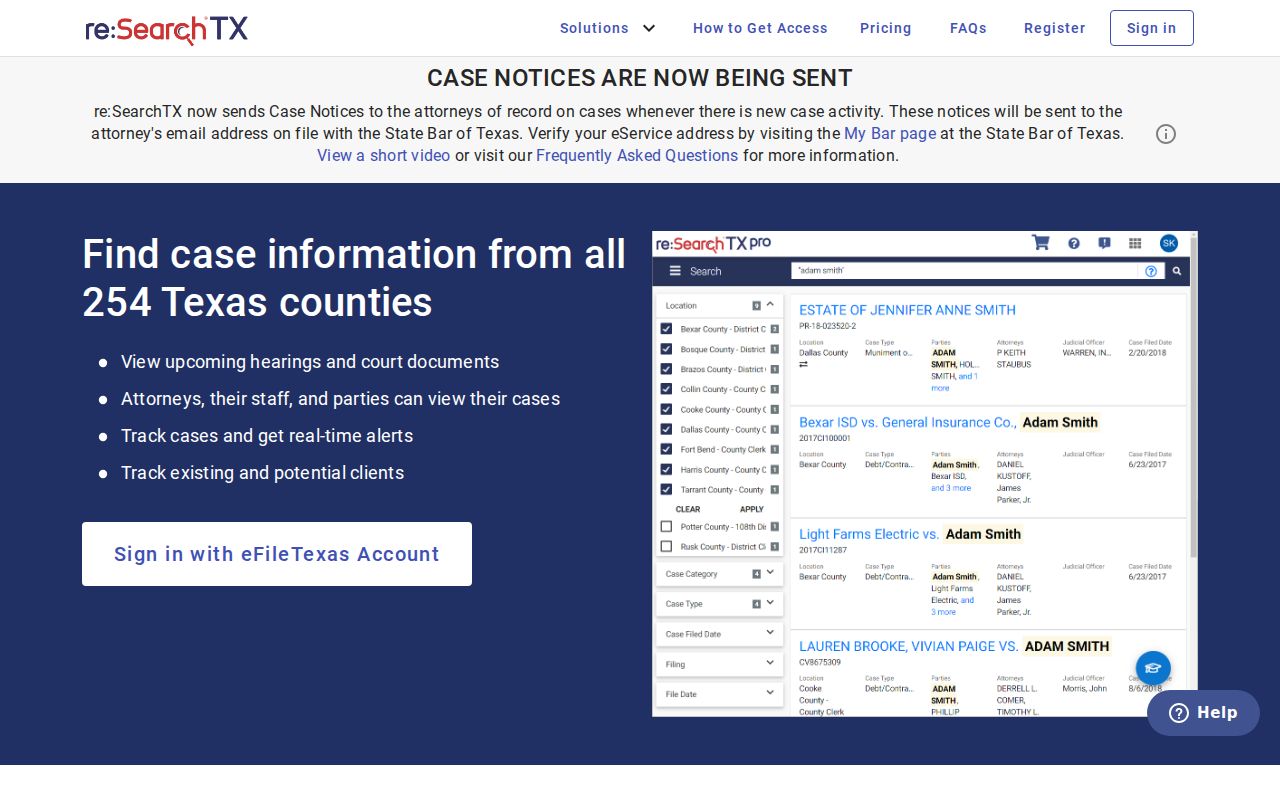
Ask the clerk for a missing file or certified copy. A docket event alone proves neither an outcome nor a person’s identity.
Verify One Texas Resident
Use the narrowest official source first and preserve its exact spelling. Keep ownership, registration, and case facts separate until another record supports the link. For a known name with an uncertain address or identity:
- Record the full name, middle initial, known county or city, approximate age, and any parcel, case, or family link. Note each search date and URL.
- Search the appraisal district by owner name. Compare owner, situs, mailing address, legal description, and parcel ID; tax mail does not prove occupancy.
- Search court records with name variants; narrow by county, date, case type, attorney, or case number. Read the docket or filing.
- Compare a vital index or other lawful source. Order a certified copy only when eligible and needed.
- Docket
- A dated list of filings, hearings, and actions, not the full file or a plain-language finding.
- Index and image
- An index points to an entry; an image is the underlying page, which may be restricted or fee-based.
- Certified copy
- A copy authenticated by its custodian. A web result is not certified.
Same-name records are weak matches when counties, dates, ages, or roles conflict. A clerk can confirm a record number or copy route, not conduct an open-ended investigation.
Read Texas Vital Indexes
Government Code §552.115 makes Texas birth records public after 75 years and death records after 25 years. During the restricted period, DSHS requires a qualified requester or documented direct/tangible interest. An index match does not open a certificate, and a verification letter is not a certified record.
The DSHS birth and death indexes list surname, given name or initials, event date, county, and sex. Digital birth indexes begin in 1925 and death indexes in 1965; earlier microfiche starts in 1903. Digital indexes cost $10 per event year; film fees vary. Search by event year and surname, including maiden names and spelling variants.
Clerk-submitted marriage and divorce indexes are not comprehensive. DSHS verification begins in 1966 for marriage and 1968 for divorce or annulment. The issuing county clerk holds a certified marriage license; the district clerk holds a certified divorce decree. For a missing entry, contact that clerk.
Order Texas Vital Records
DSHS routes requests through VS-140 for birth, VS-142 for death, and VS-142.9 for marriage or divorce verification. The death form asks for the applicant’s contact and relationship, the subject’s name and event details, record type, quantity, and payment. A mailed certificate request needs valid ID, an original signature, and notarization; a verification request does not.
Fees are not returned if no record is found or details are wrong. The DSHS fee schedule lists $22 for a birth certificate, $20 for a first death certificate, $3 for each added death certificate, and $20 for a death verification. The inspected VS-142 offers optional $25 expedited service, estimated at four weeks. Confirm current terms before applying.
The official DSHS application hub links the state’s vital-record forms and instructions.
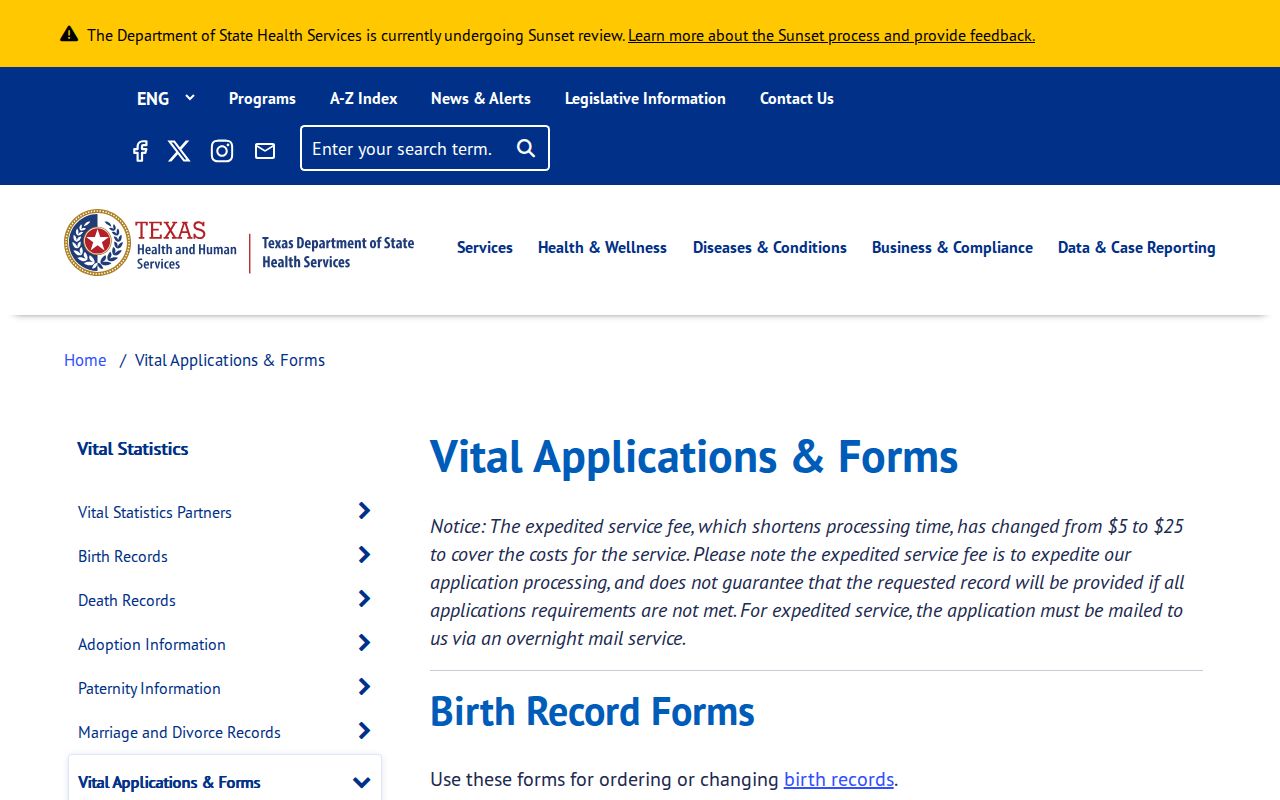
For an older or locally held event, contact the local registrar or the county or district clerk where it occurred. Local rules and fees vary.
Find Texas Heirs and Classmates
Probate can connect a decedent with an executor, heirs, estate property, and dated notices. A probate address is not necessarily current. Pair the case with an obituary or deed, and ask the county clerk for a certified filing when proof is needed.
- Family history: Pair probate with death indexes, obituaries, cemetery records, or old voter registers.
- Adoption and birth parent: Texas adoption files are confidential; use DSHS, the Central Adoption Registry, or an authorized court process.
- Former classmate: Check library or university yearbooks, alumni records, newspapers, and directories; a photo alone is not identity proof.
- Business role: Compare entity filings, assumed names, permits, and license profiles; a service address is not a home address.
Historical material may identify a past household and probate may identify an heir, but neither proves today’s address without current corroboration.
Confirm Texas Business Roles
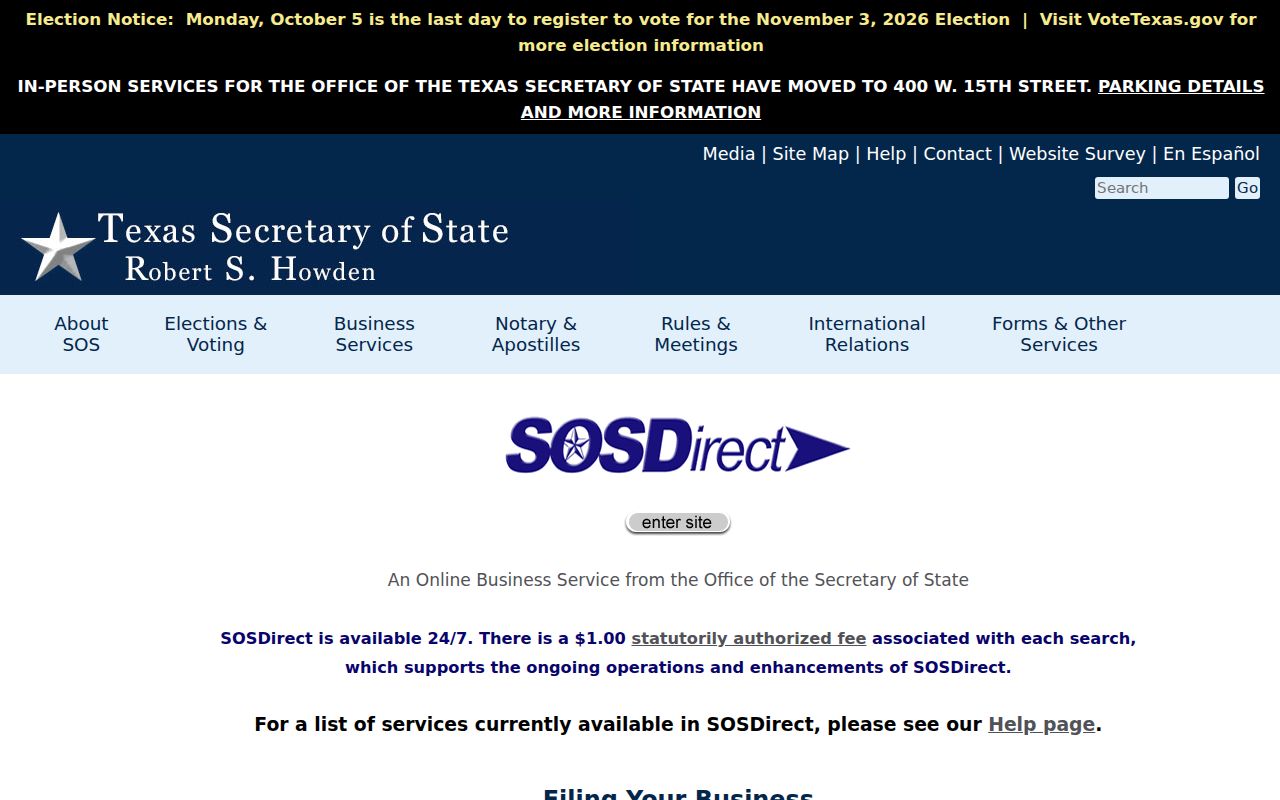
Business and license results confirm public roles, not a private home. SOSDirect searches entities, assumed names, agents, people, UCC filings, and document numbers. A search costs $1; account and copy fees may apply. SOS redacts certain confidential numbers and warns against putting them in attachments.
The Secretary of State is shifting services into SOS Portal phases, so check which system is live. TDLR separates establishment, individual, and school searches. License type and a previous or new number are required; optional name searches need at least three letters. Results may show number, type, name, status, expiration, and notes.
The linked SOSDirect page is the state’s route to business filings and search services.
Medical Board profiles include status, education, and board actions; some practice-address details are licensee-submitted. A role may help separate same-name records, but it does not establish where someone lives.
Request Texas Public Records
If an online result is missing, ask its custodian in writing by mail, email, hand delivery, or the method the office accepts. Identify an existing record by name, case number, parcel ID, date range, or series. The PIA does not require a new report or research answer.
Use clerk or Rule 12/common-law routes for court files, DSHS or a local registrar for vital records, and the SOS or county Chapter 18 process for voter lists. If a document is restricted, ask whether a public index or verification is available.
The Texas Attorney General’s written-request page explains accepted delivery routes and the limits on requests for existing records.
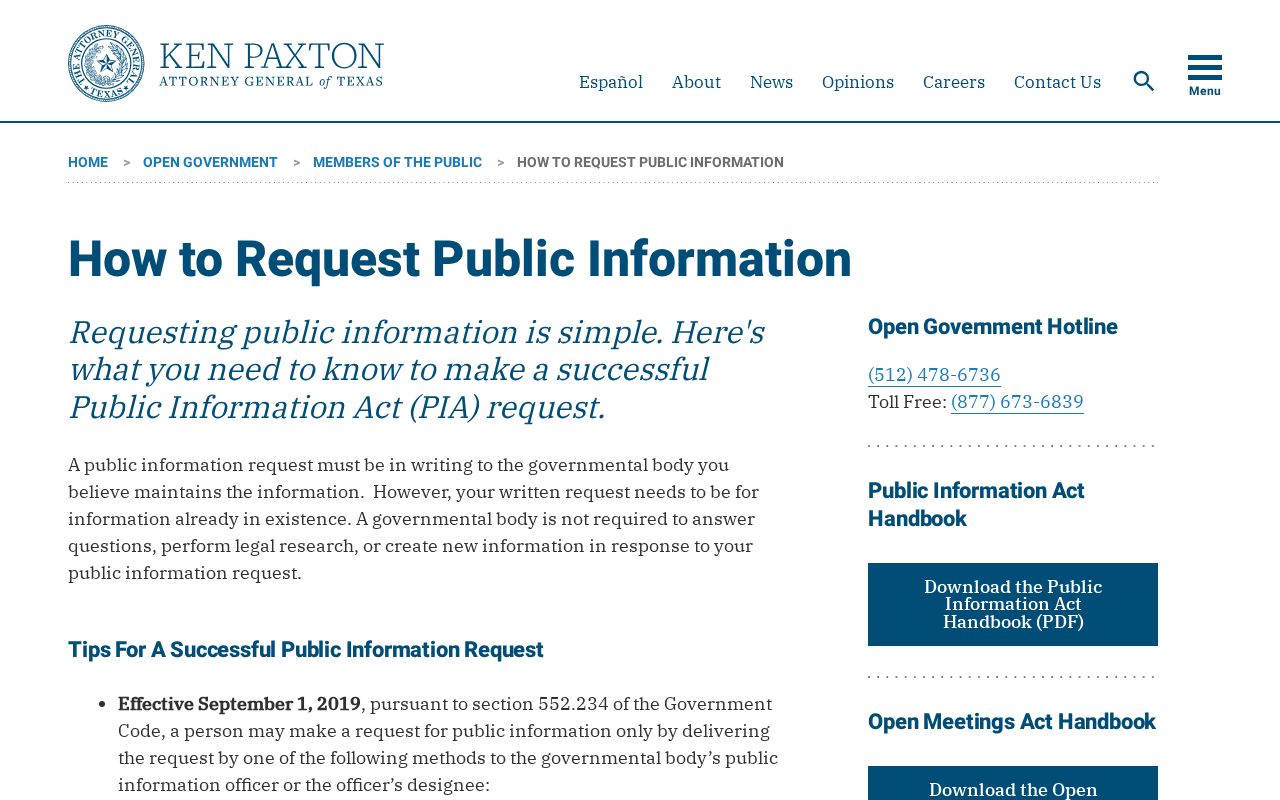
Keep the response, fee estimate, and redaction explanation with the search notes.
Protect Texas Resident Addresses
Texas voter records can hide or replace addresses for qualifying crime victims, judges, and other protected people. Web suppression does not automatically remove a record from a PIA response. Social Security, driver’s-license, and DPS ID numbers are confidential; Address Confidentiality Program participants use separate election forms.
The Attorney General’s Address Confidentiality Program provides a substitute PO Box and mail forwarding to eligible survivors, subject to legal disclosure exceptions. Government Code can also protect residence or phone data. Do not infer a hidden address from nearby records; ask the custodian about a correction or safety concern.
Lawful use. Use records for lawful personal, family-history, or civic research. Texas law prohibits stalking and harassment; never use a name or address to threaten or intimidate someone.
For a wrong match, give the custodian the record number and supporting details. A search result is not a final identity decision.